
Hey, guess what? Different types of wood react differently to sanding, staining, and finish. Seem obvious? Sure! But clearly overlooked in my case 😦
My ongoing Salon table build has been going great! The cuts went well, the joints fit, it’s the right size, and it’s super-smooth after sanding. What could go wrong?
Maple
I used maple since it was easy to find, easy to work, and used throughout the bathroom (cabinets, etc.). I was pretty happy with it until it was time to stain.
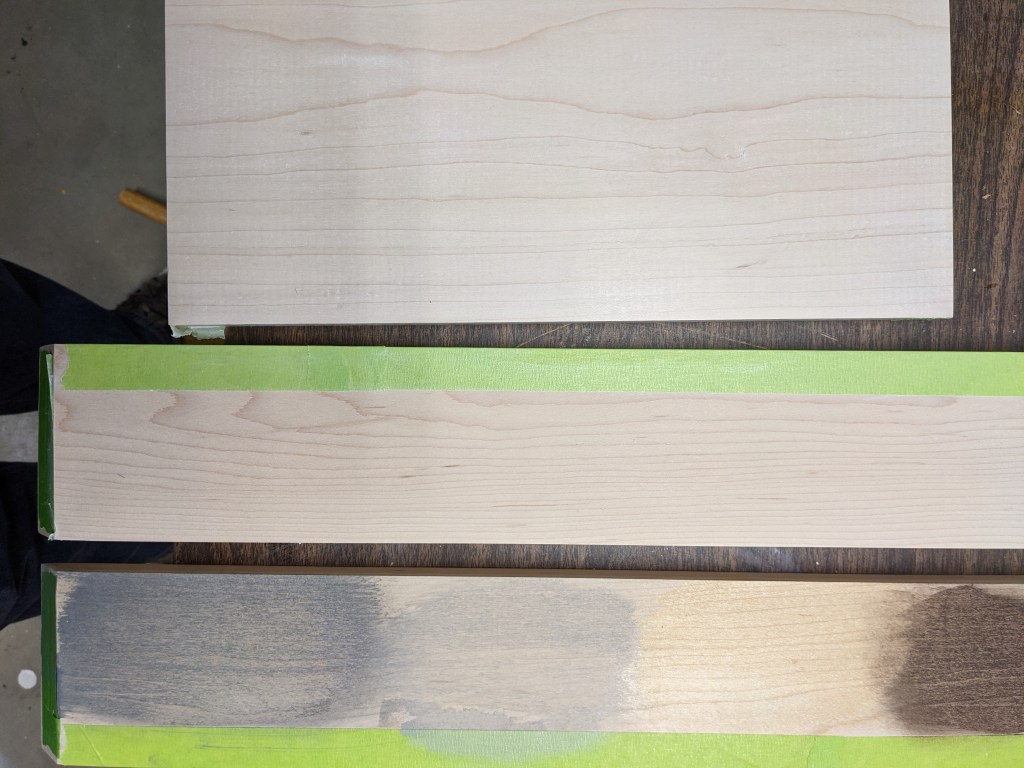
I applied a coat of white-wash, let it sit, then wiped it (per typical). The stain completely wiped off (still looked like bare wood). Then I tried “Antique White” stain. Same results. Then I tried darker stain. Some remained after wiping, but it’s blotchy and inconsistent (photo below).
I consulted the Internets, and the message was consistent: Maple has a tight grain and doesn’t do well with stain (it doesn’t soak in evenly, if at all). And whatever you do, don’t sand it too finely, because grit higher than 220 will “burnish” the wood, effectively sealing it from stain. Yep, I went up to 400, which explains the wipe-off.
The internets recommend water-based stain (or dye) and lower grits. So I’ll re-sand at 180 (not knowing if working backwards is possible), attempt a dye (rather than a stain), re-attempt with a water-based stain if the dye doesn’t work, and if still no joy: just spray on the water-based polyurethane and go au naturel.
I also bought “The Essential Wood Book: The Woodworker’s Guide to Choosing and Using Lumber” that covers finishing tricks for different wood types (fixing the barn door after the horse came home). Learn by doing!!! At least I didn’t stain anything that will show, so no damage done. I’ll update later when this project is finished. 🙂
 WidgetWood
One thought on “Wood 101: Not all wood is the same”